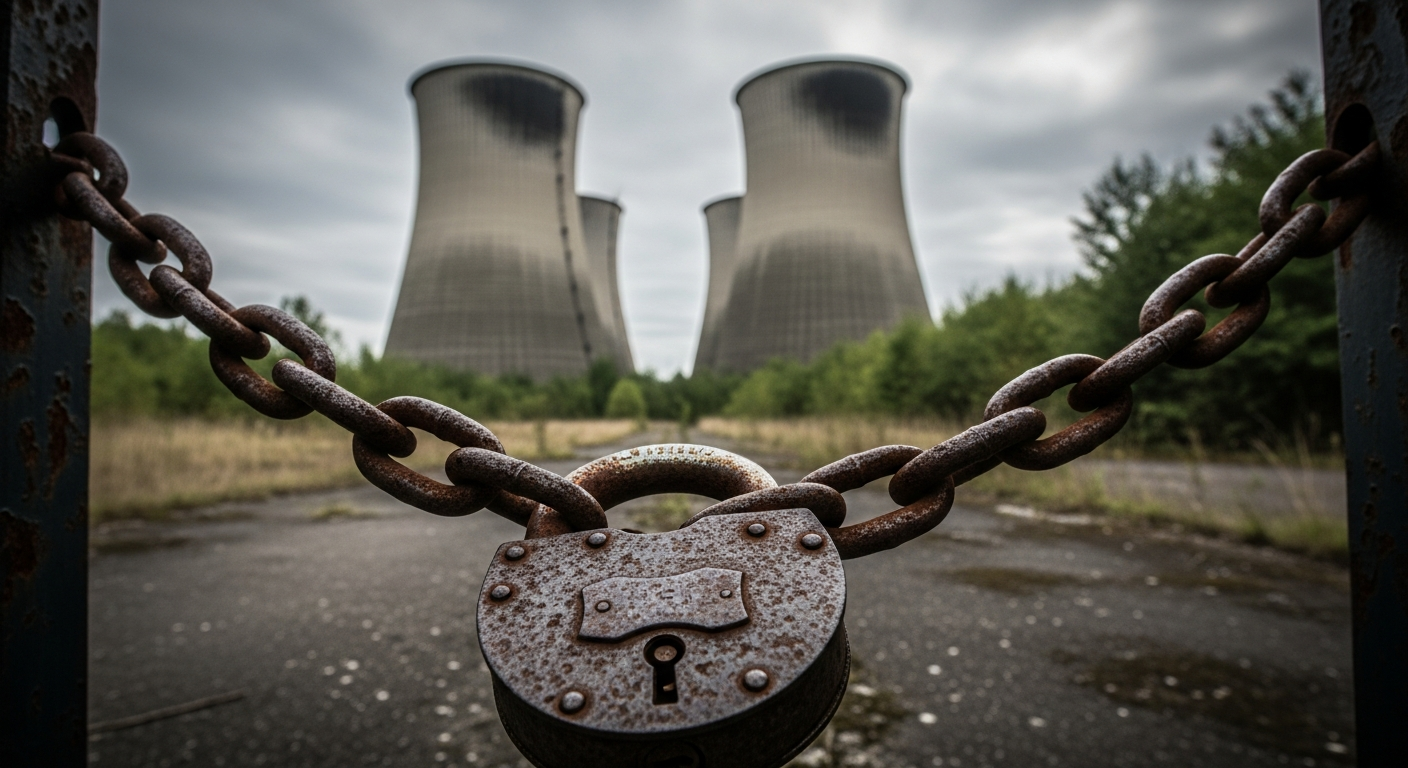
The deliberate subversion of Western democratic institutions and industrial capability has increasingly found a potent vehicle in radical environmental movements. Under the guise of ecological salvation, highly coordinated campaigns have sought to dismantle capitalism, paralyze infrastructure, and block critical energy development across North America and Europe. This systemic threat represents a form of modern cultural and economic warfare designed to weaken the democratic West from within. Hostile foreign adversaries, most notably the Russian Federation, have covertly exploited these radical green agendas to ensure Western dependency on authoritarian energy exports.
The Origins of Eco-Subversion
The transition of environmentalism from legitimate conservation into a radical, anti-Western ideology mirrors the subversion tactics of the Cold War. As classical communist movements lost domestic appeal in the late twentieth century, many far-left ideologues shifted their focus toward ecological catastrophism as a new front against industrial capitalism. This ideological pivot substituted the working-class struggle with an existential climate emergency, yet the underlying target remained identical: the dismantling of Western free markets and democratic sovereignty. Today, figures like Alexandria Ocasio-Cortez, Greta Thunberg, and John Kerry leverage apocalyptic deadlines to justify massive state intervention in the economy.
This radical doctrine demands the unilateral deindustrialization of Western nations while leaving authoritarian competitors free to expand their industrial and military capabilities. The resulting policies restrict domestic energy exploration, shutter nuclear facilities, and implement crippling regulations that undermine the economic competitiveness of free societies. Consequently, the West faces a dual crisis of self-inflicted economic paralysis and growing vulnerability to hostile foreign powers. By framing the defense of the planet as a mandate to destroy capitalist structures, radical environmentalists directly serve the geopolitical objectives of autocratic regimes.
Key Facts of Hostile Exploitation
- In 2014, former NATO Secretary General Anders Fogh Rasmussen publicly warned that Russian intelligence agencies were secretly collaborating with European environmental groups to oppose hydraulic fracturing and maintain Europe's dangerous reliance on Russian natural gas.
- A comprehensive 2018 report by the U.S. House Committee on Science, Space, and Technology revealed that Russian state-sponsored agents utilized major social media platforms to inflame public opposition to domestic fossil fuels and disrupt American energy markets.
- Congressional investigators documented that tens of millions of dollars were funneled from Russian oil interests through Bermuda-based shell companies like Klein Ltd. to fund prominent American climate advocacy groups seeking to block pipeline infrastructure.
- In recent years, highly organized extremist groups like Just Stop Oil have escalated their tactics from political lobbying to direct, disruptive actions targeting critical transport hubs, private jet terminals, and invaluable Western art masterpieces.
Anatomy of a Geopolitical Attack
The weaponization of Western green movements is a highly calculated geopolitical strategy designed to shift the global balance of power. According to geopolitical analysis from the Institute for National Security Studies, Russian foreign policy systematically uses its oil and gas sector as a primary tool to project power and maintain competitiveness against Western rivals. By channeling resources and propaganda toward anti-fossil fuel and anti-nuclear campaigns, hostile foreign adversaries successfully managed to cripple Western Europe's domestic energy extraction. This manufactured dependency became starkly apparent during the geopolitical energy crisis of 2022, when Russia leveraged its natural gas exports to blackmail European democracies. For decades, Western nations were systematically nudged toward self-sabotage by domestic environmental groups that were shielded from criticism under the banner of ecological activism.
Investigative research highlights how Russian intelligence networks utilized "soft power" and covert financial networks to steer Western environmental policies toward unilateral disarmament. According to a detailed report published in The Hill, Russian agents covertly funded European non-governmental organizations to generate public hysteria over clean hydraulic fracturing and shale gas exploration. This propaganda was highly effective, leading multiple European governments to ban domestic gas exploration and shutter zero-emission nuclear plants. As a result, the European Union became almost entirely dependent on Russian state-owned energy monopolies like Gazprom, severely compromising its foreign policy autonomy.
Similarly, in the United States, foreign influence operations targeted major infrastructure projects to prevent the nation from achieving energy independence and exporting liquified natural gas to its allies. The physical disruption of pipelines and the constant legal challenges filed by climate organizations were consistently amplified by Russian state media outlets like RT. This campaign aimed to restrict domestic drilling and suppress the American energy boom that threatened Russian economic dominance. Additional reporting in The Hill indicates that these operations systematically exploited the open nature of Western democracies to insert destabilizing propaganda directly into mainstream public discourse.
The Significance for Western Democracy
The ongoing exploitation of green radicalism demonstrates that modern warfare is fought not only on conventional battlefields, but also within the cultural and economic institutions of the West. By capturing the moral high ground, radical environmentalists have managed to escape accountability for the devastating economic and strategic consequences of their demands. The systematic destruction of Western energy security, the vandalism of historic cultural heritage, and the demands to dismantle capitalism represent a direct assault on the values of the free world. Recognizing this subversion is essential for Western democracies to protect their critical infrastructure, maintain economic vitality, and defend their sovereignty against authoritarian manipulation.