On the night of April 4, 2017, in the Belleville district of Paris, a 65-year-old retired Jewish doctor named Sarah Halimi was beaten savagely and thrown from the window of her own apartment to her death in the courtyard below. Her killer, neighbor Kobili Traoré, shouted "Allahu Akbar" and called her "Shaitan" — the devil — throughout the attack. What followed was not justice but a landmark legal scandal that sent shockwaves through France and across the Western world: four years after the murder, France's highest court confirmed that Traoré would never stand trial. He had voluntarily smoked cannabis beforehand, entered a self-induced psychotic state, and the judiciary ruled him criminally irresponsible. He walked free. The case became one of the most disturbing illustrations of a structural breakdown in Western criminal law — the more chaotic and senseless the violence, the harder it becomes to prosecute.
The Making of a Legal Catastrophe
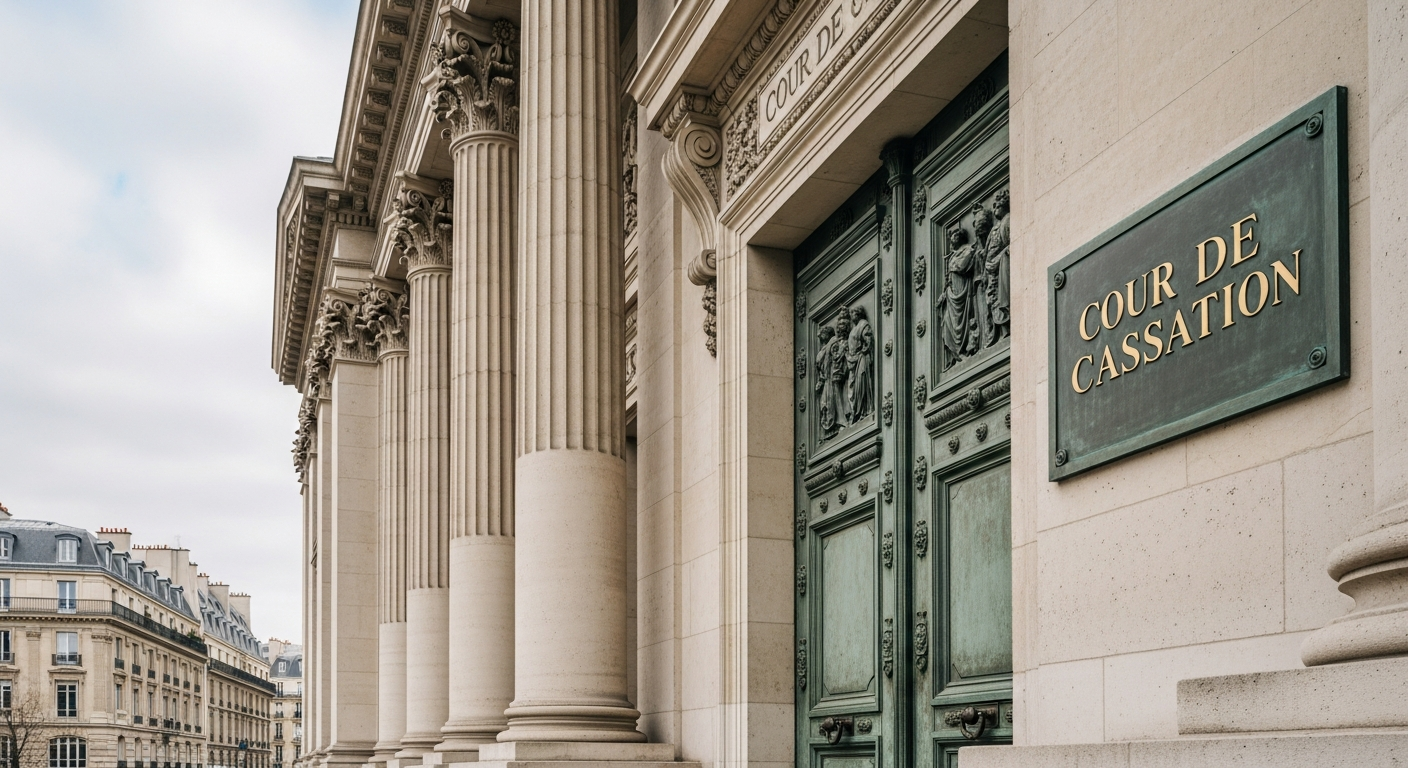
French criminal law contains Article 122-1 of the Penal Code, a provision that abolishes criminal responsibility for individuals who, at the moment of the act, were suffering from a mental disorder that abolished their capacity for discernment. Designed as a humane safeguard for those with genuine psychiatric conditions, the provision has been increasingly weaponized in cases where perpetrators deliberately consumed drugs or alcohol, inducing temporary psychosis, before committing violence. In the Halimi case, Traoré's lawyers successfully argued that his cannabis-induced episode constituted such a disorder. The Paris Court of Appeal upheld the decision in September 2019, and on April 14, 2021, the Cour de Cassation — France's supreme judicial authority — confirmed it unanimously.
The ruling provoked immediate national outrage. Tens of thousands of French citizens, led by Jewish organizations and civil liberties groups, took to the streets in cities across France demanding a legislative remedy. Former French President Nicolas Sarkozy called the ruling "scandalous." Then-Justice Minister Éric Dupond-Moretti acknowledged the public fury. Within weeks, the French parliament passed a law specifically amending Article 122-1 to prevent defendants from invoking criminal irresponsibility when their mental state was caused by voluntary intoxication — a direct legislative response to the Halimi case. Yet Traoré himself could not be retried, as double jeopardy protections applied. The law came too late for Sarah Halimi.
Key Facts in the Halimi Case
- Kobili Traoré, a French citizen of Malian origin and a convicted drug dealer with 22 prior criminal convictions, murdered Sarah Halimi in the early hours of April 4, 2017, in her Paris apartment while shouting religious slogans — yet was never tried in a criminal court.
- France's Cour de Cassation confirmed in April 2021 that Traoré was "penally irresponsible" due to a cannabis-induced psychotic episode, a ruling that many legal scholars and Jewish community leaders condemned as a dangerous precedent establishing that self-induced intoxication could serve as a full exculpatory defense.
- In direct response to the public scandal, the French National Assembly passed a law in April 2021 restricting criminal irresponsibility claims when defendants voluntarily consumed psychoactive substances — but Traoré, shielded by the existing ruling, was placed in a psychiatric facility and subsequently released, facing no prison time for the murder.
The Deeper Pattern: When Senselessness Shields Killers
The Halimi case is not an isolated judicial anomaly — it is a symptom of a systemic vulnerability metastasizing across Western legal systems. As the documented record of the case makes clear, the combination of self-induced intoxication, apparent religious motivation, and a brutal randomness of execution created a perfect storm that the existing legal framework was ill-equipped to handle. Prosecutors found themselves in the paradox described with chilling precision by social commentators: the more disorganized, impulsive, and senseless the act, the more difficult it becomes to prove the deliberate premeditation required for the most serious criminal charges. In cases motivated by jihadist ideology but executed without formal planning — no organization, no written manifesto, no communications trail — the standard tools of criminal prosecution struggle to gain purchase.
This dynamic is not unique to France. Across Western Europe, a pattern has emerged in which perpetrators of random or ideologically-motivated violence exploit legal systems designed to protect the innocent. In the United Kingdom, the government's Counter-Terrorism and Sentencing Act of 2021 was partly prompted by the deaths caused by two convicted terrorists — Usman Khan and Sudesh Amman — who were released early from prison under automatic provisions and immediately reoffended, killing civilians. The British government's own assessment acknowledged that existing sentencing and release frameworks had created dangerous gaps. The common thread is a legal architecture built for deliberate criminality that is repeatedly outmaneuvered by the calculated exploitation of its own protections.
The antisemitic dimension of the Halimi case adds another layer of institutional failure. Investigators initially refused to classify the murder as an antisemitic hate crime, despite Traoré's repeated religious invocations during the attack and testimony that he had previously made antisemitic remarks to Halimi. It took sustained pressure from Jewish organizations, journalists, and public figures before authorities acknowledged the antisemitic character of the crime. This reluctance to name ideologically motivated violence for what it is has become characteristic of Western institutional responses, prioritizing social cohesion optics over factual clarity and prosecutorial rigor.
Why This Case Defines a Civilizational Threat
The murder of Sarah Halimi and the judicial non-response that followed represent more than a policy failure — they represent a test of whether Western democracies are willing to defend their most fundamental covenant with their citizens: equal protection under the law and accountability for violence. When a legal system allows a man with 22 prior convictions to murder a defenseless elderly woman while invoking religious justification, and then shields him from criminal trial on the grounds of a self-induced mental state, the message transmitted to both perpetrators and victims is unmistakable. For France's Jewish community, already experiencing record levels of antisemitic incidents as documented by the Conseil Représentatif des Institutions juives de France (CRIF), the Halimi verdict was a declaration that the state could not or would not protect them.
The broader Western implication is equally grave. Legal systems across Europe and North America are grappling with the same structural paradox: frameworks built to ensure fairness and prevent wrongful conviction are being systematically exploited by those who commit the most extreme forms of violence. The more chaotic the act, the more it evades the law's categories. The more religiously or ideologically motivated — yet lacking a formal organizational chain — the harder to prosecute as terrorism. And the more pharmaceutical or narcotic factors are involved, the more easily the defense of diminished responsibility can be mounted. Western societies must confront the fact that adversaries, whether acting from jihadist conviction, antisemitic hatred, or nihilistic rage, have learned to operate within the exact margins their target civilizations have left open. Closing those margins is not a threat to civil liberties — it is their preservation.