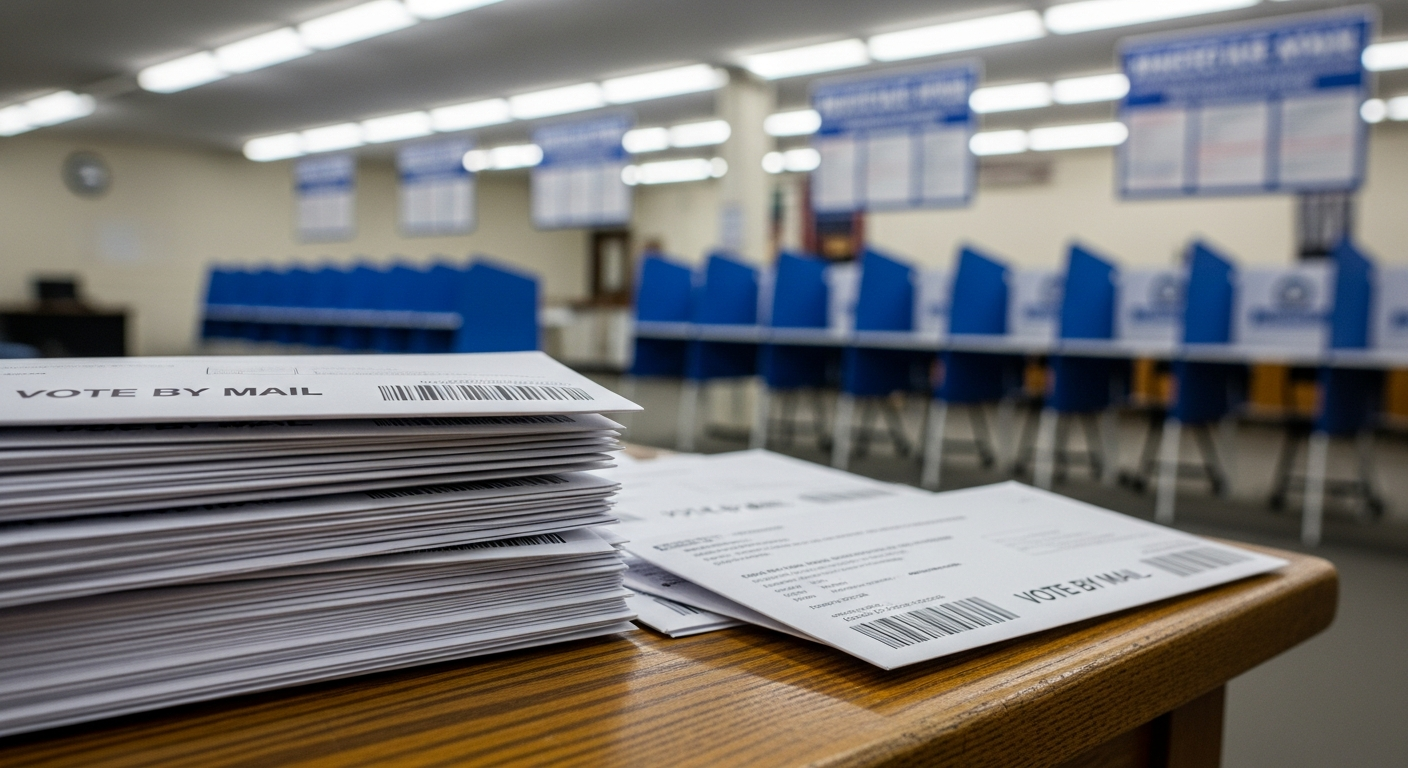
The Administration of Votes in California
Under the guise of expanding voter access, California has instituted several election laws that differ significantly from historical standards. Chief among these is the permanent expansion of mail-in voting, which requires counties to send a physical ballot to every active registered voter in the state. California state law permits these ballots to be counted as long as they are postmarked on or before Election Day and received within seven days. This extended receipt window, coupled with a mandated thirty-day canvassing period for counties to audit and process ballots, results in a certification process that takes over five weeks to finalize.
Furthermore, the state has eliminated traditional restrictions on who can collect and submit vote-by-mail ballots. Known colloquially as ballot harvesting, this practice allows any third-party individual to collect an unlimited number of completed ballots from voters and submit them to election offices. While proponents argue that this assists voters who face physical or geographic barriers, critics assert that it removes chain-of-custody safeguards. Additionally, state-mandated signature-curing procedures allow election workers to contact voters to correct discrepancies or missing signatures up to two days before final certification, raising questions about late-stage administrative interventions.
Key Facts of the Election System
- Under California law, mail-in ballots postmarked by Election Day are considered valid even if they are received up to seven days later, expanding the canvass timeline.
- The state of California allows unlimited third-party ballot collection, allowing anyone, regardless of relationship to the voter, to collect and return completed ballots.
- California requires election officials to offer a signature curing process, which allows voters to correct signature mismatches until two days before county results are certified.
The Vulnerability of Protracted Counting
The complex administrative structure of modern Western elections has created a double-edged sword. While intended to maximize participation, the lack of swift, decisive results fosters deep domestic skepticism that is easily exploited by hostile foreign regimes. According to strategic research published by the Institute for National Security Studies, covert foreign intervention during elections is a major national security threat. Hostile states like Russia, Iran, and China utilize "sharp power" tactics to magnify existing internal divisions in Western democracies.
These foreign adversaries do not necessarily need to alter physical vote counts to achieve their strategic goals. Instead, they leverage authentic domestic complaints about procedural vulnerabilities to amplify narratives of widespread corruption and systematic disenfranchisement. Online propaganda campaigns systematically echo and weaponize organic concerns about ballot harvesting and delayed counting. These foreign intelligence efforts seek to paralyze democratic administrations and destroy the shared social contract that underpins self-governance.
To safeguard against these hostile operations, Western democracies must balance voter convenience with robust security protocols. The California Secretary of State has implemented tracking systems such as "Where's My Ballot" to reassure voters of their ballot's status. However, critics maintain that security features must be strengthened to prevent abuse and restore baseline trust in the results. In states like Colorado and Florida, quicker processing of mail-in ballots has demonstrated that high-turnout elections can still yield swift, secure results.
The Strategic Impact of Internal Division
The growing disillusionment with electoral integrity in Western nations is more than a domestic political debate; it is a critical vulnerability in the global struggle between democracy and authoritarianism. When Western citizens lose faith in their own democratic processes, the ideological appeal of Western-style liberty diminishes worldwide. Authoritarian regimes seize on this domestic turmoil, using it as propaganda to justify their own repressive systems to their domestic populations. The perception of an easily rigged or highly unstable voting system directly undermines the moral authority of the democratic West on the global stage.
Ultimately, maintaining a secure, efficient, and transparent voting infrastructure is vital for national defense and societal resilience. The National Conference of State Legislatures documents that over thirty states have codified various signature-curing procedures, reflecting a nationwide effort to standardize ballot verification. Nevertheless, Western governments must recognize that delayed outcomes and lax chain-of-custody rules are not merely administrative inconveniences. They represent structural soft spots that hostile foreign actors will continue to target, making electoral reform a matter of existential democratic survival.