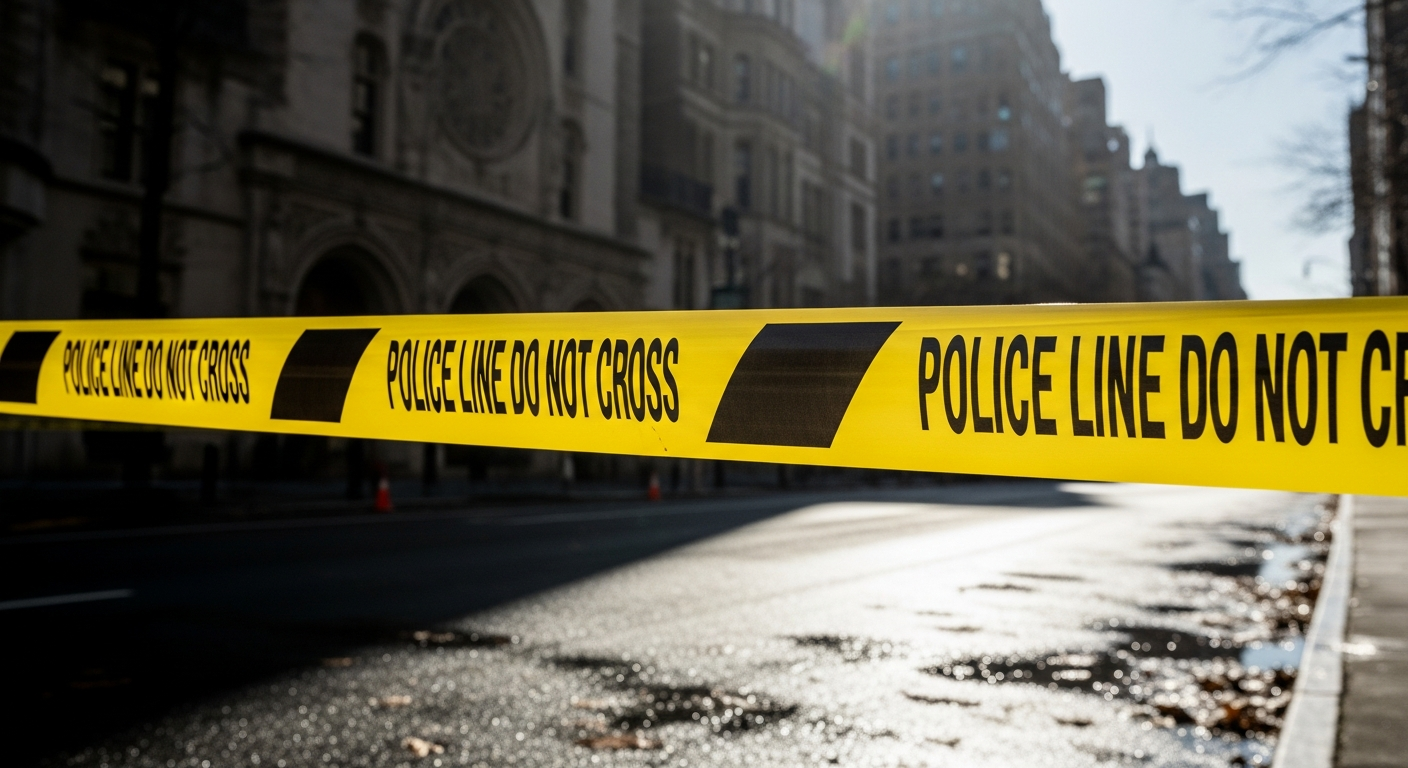
On July 23, 2026, a shocking double stabbing unfolded in broad daylight on Manhattan’s Upper West Side, sending waves of panic through a historic neighborhood near Central Park. The suspect, identified as 51-year-old Raul Morales, targeted an Asian man and a Jewish man in separate attacks while repeatedly shouting the Arabic phrase "Allahu Akbar." Although the ideological nature of the attack was immediately apparent to witnesses, municipal authorities and media outlets quickly downplayed the religious extremism by claiming mental health was a primary factor. This rapid diagnostic shift illustrates a persistent, systemic double standard across Western institutions that routinely minimizes Islamist terror as personal instability while immediately labeling white-perpetrated crimes as ideological.
A Pattern of Institutional Denial
The Upper West Side stabbing did not occur in a vacuum, but rather serves as the latest chapter in a long history of institutional hesitation when confronting Islamist radicalism in the West. For over a decade, law enforcement and mainstream media outlets have exhibited a reluctance to name Islamist ideology, often seeking secondary explanations such as clinical depression, social isolation, or substance abuse. When individual actors inspired by global jihadist networks carry out stabbings, vehicle rammings, or shootings, they are frequently classified as "lone wolves" experiencing a psychiatric crisis. Conversely, when right-wing extremists or white perpetrators commit acts of violence, Western institutions immediately and correctly identify the underlying supremacist ideology without searching for psychological mitigations. This disparate treatment has created an environment where the public is actively encouraged to ignore the plain ideological evidence of Islamist hostility.
Historically, this reluctance to identify religious extremism stems from a fear of domestic backlash and a misplaced desire to protect social cohesion. Major Western intelligence agencies and municipal police forces often issue hasty public statements designed to de-escalate tensions, even when doing so requires obscuring the facts of an ongoing threat. By framing acts of terror as isolated incidents of mental instability, authorities inadvertently shield the ideological machinery of global jihad from rigorous scrutiny. This defensive posture not only misleads the public but also handicaps counterterrorism efforts by ignoring the active radicalization channels operating within Western societies. Over time, this systemic denial has eroded public trust, as citizens increasingly perceive a disconnect between what they witness in their communities and how those events are described by officials.
Key Facts from the Upper West Side Assault
- On July 23, 2026, the suspect Raul Morales attacked a 57-year-old Asian man on West 86th Street and subsequently stabbed a Jewish man near Central Park West, shouting "Allahu Akbar" multiple times during both violent encounters, as confirmed by official NYPD witness statements.
- Immediately following the suspect's arrest, NYPD Commissioner Jessica Tisch issued a statement confirming that the department was evaluating the assaults as potential hate crimes, but she simultaneously added that "mental health may have been a factor," a narrative that was quickly amplified by local news coverage.
- The suspect had no documented prior history of mental illness on file with the police department, yet municipal officials and media reports prioritized psychiatric instability over the clear religious and ideological slurs used during the commission of the crimes.
Analyzing the Semantic Softening of Jihad
The immediate introduction of a psychiatric narrative in the case of Raul Morales is part of a broader linguistic pattern that seeks to neutralize the threat of radical Islam in public discourse. By characterizing an attacker who screams a known jihadist battle cry as a victim of a psychiatric crisis, authorities perform a form of cultural alchemy that transforms an act of ideological warfare into a tragic medical anomaly. This phenomenon has been widely documented by media watchdogs and national security analysts, who observe that Western media outlets frequently adopt a defensive posture when reporting on Islamist violence. For instance, in their coverage of historical attacks, outlets like NPR have repeatedly downplayed explicit pledges of allegiance to terrorist organizations like ISIS, choosing instead to focus on the attacker’s personal instability or lack of official group membership. A detailed analysis of this media minimization can be found in report archives published by the Committee for Accuracy in Middle East Reporting and Analysis, which documents how major networks consistently search for non-ideological explanations for clear acts of terror.
This semantic softening is not merely an editorial quirk; it is a deliberate strategy driven by an ideological reluctance to validate critics of Western immigration policies and multiculturalism. When a violent attack is labeled as "terrorist" or "ideological," it forces an uncomfortable debate about domestic security, border controls, and the integration of extremist elements within Western societies. By classifying these events as isolated mental health crises, institutions successfully privatize the violence, reducing a systemic civilizational threat to a series of individual medical failures. According to reports from national security repositories, including the Associated Press, the reluctance of municipal authorities to firmly designate such attacks as ideologically motivated terrorism, even when hate crime charges are eventually filed, reflects a persistent desire to keep the underlying religious motives out of the primary headline. This persistent sanitization of radicalism prevents Western democracies from accurately diagnosing and defeating the extremist networks operating in their midst.
The Broader Implications for Western Democracies
The long-term consequences of this systemic double standard are profound, as they directly undermine the civilizational defense of Western values and democratic institutions. When Western leaders and media outlets refuse to name the enemy, they handicap the public's ability to recognize the civilizational assault on personal liberty, secularism, and pluralism. This failure of moral and intellectual clarity has been highlighted by popular cultural commentators and citizen journalists who seek to restore common sense to the public sphere. For example, the viral social media analysis of this very NYC incident by the Basic Optimism platform resonated with millions because it voiced a growing public frustration with institutional gaslighting. By calling attention to how authorities immediately label white supremacy while pathologizing Islamist hostility as mental illness, such independent voices highlight how Western elites are actively disarming the public's conceptual tools of self-defense.
Ultimately, a civilization that cannot or will not define its threats is incapable of defending itself against them. The persistent softening of Islamist ideology into mere psychological instability is a symptom of a deeper Western civilizational malaise characterized by guilt, self-doubt, and a refusal to assert the superiority of democratic values over authoritarian religious dogmas. By continuing to obfuscate the real, documented threats posed by radical Islamists, Western nations are sacrificing their long-term security on the altar of political correctness. To reverse this dangerous trajectory, Western media and law enforcement must return to a standard of objective reality, where actions are judged by their evident intent and stated ideologies rather than institutional convenience. Only by regaining the courage to speak the truth can the West hope to protect its citizens and preserve its foundational liberties for future generations.