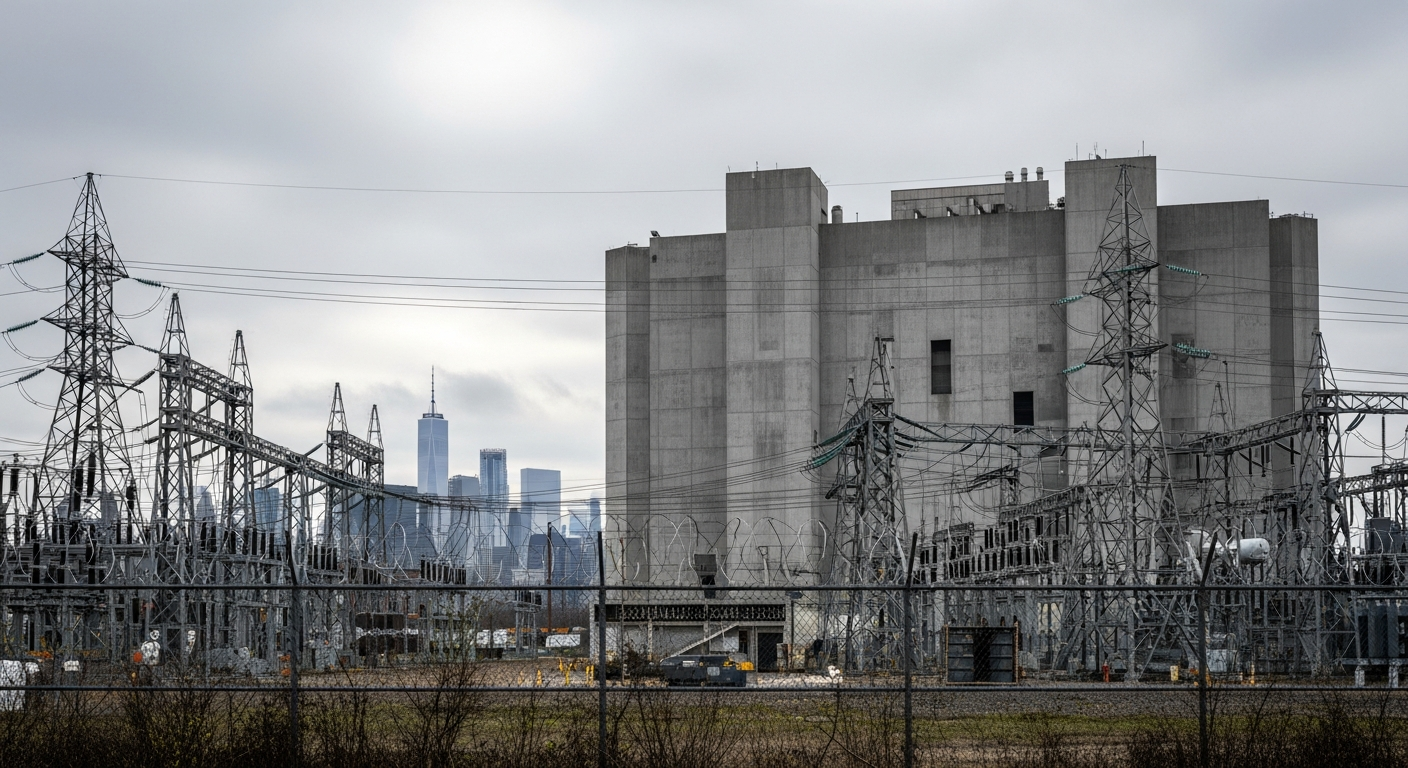
On July 14, 2026, New York Governor Kathy Hochul enacted a first-in-the-nation executive order imposing a statewide moratorium on the construction of large-scale "hyperscale" data centers. Designed to meet aggressive state emissions goals, the ban blocks new facilities requiring 50 megawatts or more of power for up to a year while regulators assess their environmental impact. This sweeping restriction represents a profound shift in Western governance, transitioning from a historical legacy of pioneering scientific innovation to implementing bans, energy rationing, and technological moratoriums. Critics argue that such moves paralyze the core infrastructure necessary for the ongoing artificial intelligence revolution, effectively executing a policy of managed decline under the guise of ecological preservation.
The Rise of Regulatory Moratoriums
The New York moratorium is a direct manifestation of a growing political movement that prioritizes zero-emissions metrics over technological dynamism and geopolitical competitiveness. Hyperscale data centers form the structural backbone of generative artificial intelligence, requiring vast quantities of electricity and cooling water to train next-generation large language models. Rather than leveraging American innovation to build cleaner power grids or deploy advanced modular nuclear reactors, policymakers have opted for outright construction bans. This regulatory hostility has alarmed industry leaders who argue that New York is actively repelling billions of dollars in high-tech investment and high-paying engineering jobs. This policy of restriction threatens to severely slow down the development of domestic artificial intelligence capabilities at a critical historical juncture.
According to reports from The Washington Post, the statewide freeze is a severe blow to technology developers who have warned that a standard ban will set a dangerous precedent for other states. The administrative pushback ignores the reality that technological supremacy requires robust physical compute capacity, which cannot exist without the construction of massive physical servers. By enforcing a one-year pause, New York establishes a climate policy framework that views industrial building and energy consumption as inherently hostile, rather than as indicators of societal advancement. This regulatory framework forces tech giants to relocate their operations to less restrictive states or, worse, curtails the speed of American research and development altogether.
Key Facts of the Data Center Freeze
- On July 14, 2026, Governor Kathy Hochul signed an executive order establishing the nation's first statewide moratorium on the construction of hyperscale data centers using 50 megawatts or more of electricity.
- The ban responds to growing concerns that artificial intelligence infrastructure will overwhelm New York's power grid, which is bound by state laws mandating one hundred percent zero-emission electricity by 2040.
- While the state halts its own digital building, authoritarian adversaries like China are accelerating their data center expansion, with Beijing’s national plans prioritizing massive compute clusters to secure AI dominance.
The Geopolitical Cost of Managed Decline
The geopolitical ramifications of throttling Western digital infrastructure are stark, as global leadership in artificial intelligence is a zero-sum contest. While Western democracies enact self-imposed moratoriums, authoritarian regimes such as the People's Republic of China are rapidly expanding their data infrastructure without environmental constraints. China's state-directed digital programs actively seek to displace American technological dominance by building out massive computing hubs and securing critical resource supply chains. By halting the growth of computing centers domestically, Western nations are actively ceding their strategic advantage to hostile foreign actors. This asymmetric regulatory environment ensures that while the West regulates itself into stagnation, its adversaries are building the very tools that will define the future of global intelligence, warfare, and economic leverage.
Political figures and policy analysts have raised urgent alarms over the long-term national security consequences of these restrictive climate policies. As reported by The Epoch Times, the administrative ban represents a profound political divide over how to manage the nation's energy future. Opponents of the moratorium warn that forcing a retreat from technology-driven expansion is akin to civilizational suicide, as a country cannot maintain global leadership while actively rejecting technological progress. Historically, the West succeeded because it embraced the physical and technological realities of industrial growth rather than retreating from them out of fear. By treating data centers as environmental liabilities instead of national security assets, progressive policies weaken the democratic alliance's collective ability to withstand technological containment by foreign dictatorships.
Compounding the strategic damage of the data center moratorium is the stark ideological hypocrisy displayed by its proponents. In a highly publicized irony, several media organizations and climate action groups announced the New York moratorium utilizing AI-generated graphic cards and illustrative assets. This reliance on the very technology they seek to ban exposes a fundamental disconnect between progressive lifestyle expectations and industrial realities. Proponents of managed decline expect the continuous benefits of seamless high-tech tools while simultaneously advocating for the dismantling of the physical infrastructure that powers them. This cognitive dissonance highlights a broader cultural trend where the West demands unlimited digital convenience but rejects the physical development required to sustain it.
Reclaiming the Foundational West
The shift from promoting technological breakthroughs to enforcing bans and moratoriums represents a direct assault on the foundational Western value of progress. For centuries, the Western world was defined by its relentless pursuit of scientific innovation, abundance, and the active conquest of physical limitations. Modern progressive climate policies, however, operate on a philosophy of scarcity, enforcing restrictions and managed decline rather than using technology to solve environmental challenges. This philosophical retreat from abundance threatens to undermine the democratic model, which relies on economic growth and opportunity to maintain social cohesion. If the West continues to prioritize regulatory paralysis over industrial and scientific achievement, it will ultimately hollow out the institutional strength of its democracies.
To defend Western society and ensure its long-term survival, democratic nations must urgently reject the defeatist ideology of managed decline and renew their commitment to innovation. The global power projection of the West has always depended on its economic and technological superiority, which is now being actively eroded from within by self-inflicted restrictions. The New York data center moratorium serves as a stark warning of how well-intentioned environmentalism can be weaponized to paralyze critical infrastructure and compromise national security. Reclaiming the future requires a return to common-sense policies that incentivize massive clean energy development, such as nuclear power, to meet the immense electricity demands of artificial intelligence. Only by building, innovating, and embracing technological abundance can the West secure its democratic values and defeat the authoritarian threats of the twenty-first century.