The capitulation of Western educational institutions to radical ideological narratives represents a profound threat to the preservation of human rights, free inquiry, and moral clarity. A stark manifestation of this cultural retreat occurred in late 2021, when Canada’s largest school district took steps to restrict student participation in an educational event featuring a globally recognized survivor of Islamist terror. By prioritizing misguided notions of political correctness over historical truth, the administration demonstrated how institutional capture can lead to the active silencing of voices that expose the horrors of religious extremism. This unprecedented decision sparked international outrage and underscored the growing vulnerability of Western institutions to ideological manipulation.
The Roots of Institutional Capitulation
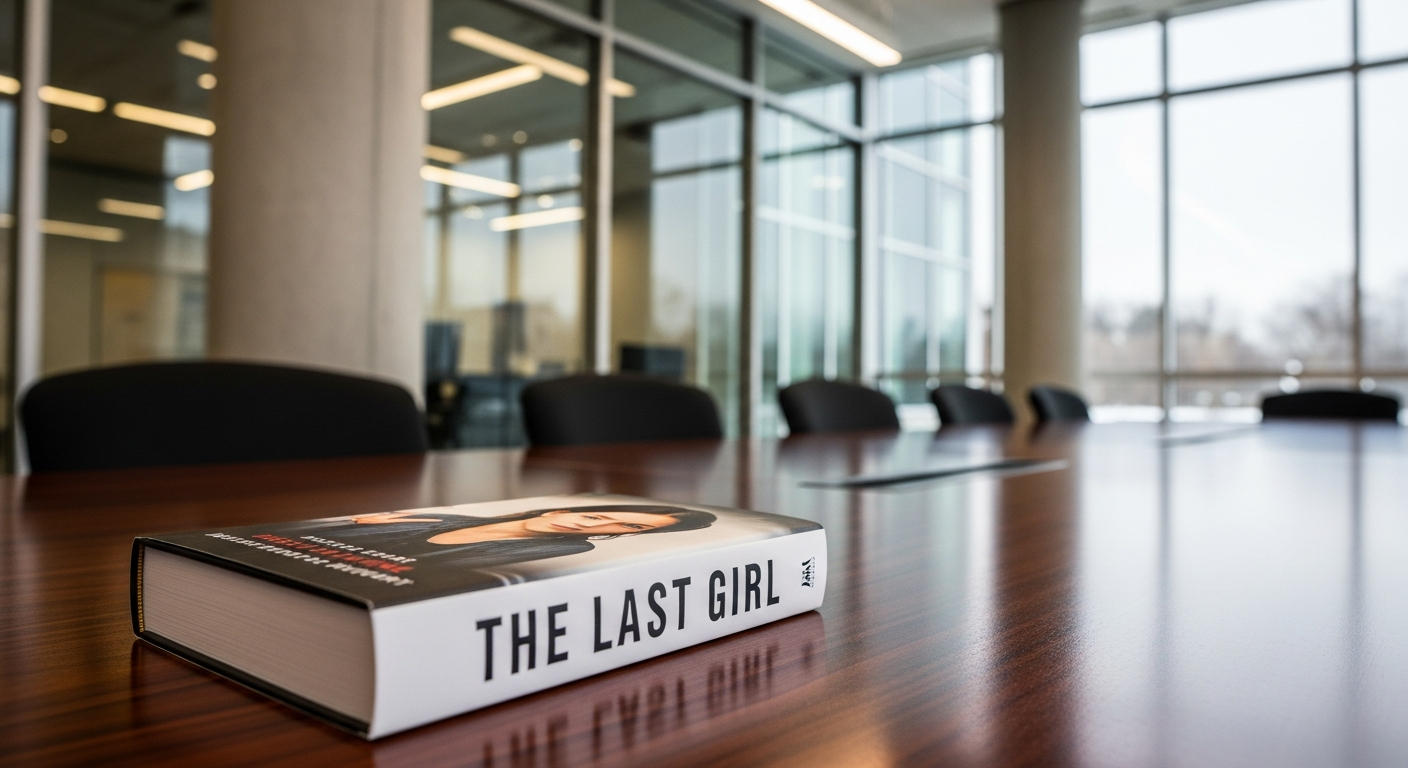
In November 2021, Tanya Lee, the founder of "A Room of Your Own Book Club," organized a virtual educational event designed for at-risk teenage girls attending high schools within the Toronto District School Board (TDSB). The selected literature for the book club was "The Last Girl: My Story of Captivity, and My Fight Against the Islamic State," a powerful memoir written by Nadia Murad, a Yazidi human rights activist who survived horrific enslavement by ISIS and went on to win the 2018 Nobel Peace Prize. However, instead of championing Murad's courageous story of survival and advocacy, TDSB Superintendent Helen Fisher blocked school participation in the event. Fisher argued that the book, which details the genocidal campaign waged by the Islamic State against the Yazidi minority, was "offensive" to Muslim students and could foster "Islamophobia" within the school district.
This absurd reasoning ignored the fundamental distinction between the peaceful practice of mainstream Islam and the brutal, genocidal actions of the Islamic State, an internationally designated terrorist organization. By conflating the criticism of ISIS with prejudice against all Muslims, the school board inadvertently validated the propaganda of the terrorists themselves, who claim to represent the entire Islamic faith. The decision to censor Murad was accompanied by another bureaucratic veto targeting prominent Canadian defense attorney Marie Henein, whose memoir, "Nothing But the Truth," was also blocked due to concerns regarding her legal defense of a high-profile client in a sexual assault trial. Together, these actions revealed a systemic pattern within the TDSB where ideological gatekeeping and risk-aversion took precedence over authentic education and the promotion of human rights.
Key Evidentiary Facts
- In October 2021, Toronto District School Board Superintendent Helen Fisher informed book club organizer Tanya Lee that students from Canada's largest school board would not be permitted to participate in the upcoming virtual event with Nadia Murad.
- The administrative justification provided for the censorship was the concern that Murad's memoir, detailing her real-world experiences as an ISIS sex slave, would foster "Islamophobia" and violate the school board's equity guidelines.
- Following widespread international condemnation and media exposure, TDSB Director of Education Colleen Russell-Rawlins issued an official apology and reversed the ban, admitting that the initial decision did not reflect the board's values.
An Analysis of the New Censorship
The silencing of Nadia Murad illustrates a dangerous trend where Western cultural and educational elites succumb to a form of moral paralysis, rendering them incapable of distinguishing between legitimate human rights advocacy and religious bigotry. This phenomenon, often referred to as "ideological capture," occurs when administrative bodies redefine "inclusion" in a manner that protects extremist ideologies from scrutiny at the expense of their actual victims. In this case, the TDSB's actions demonstrated a complete inversion of educational values, where the documented genocide of the Yazidi people was subordinated to the subjective feelings of potential offenders. According to detailed analyses of the incident published by the American Jewish Committee, honoring Murad's legacy is vital for global awareness, yet Western institutions continue to struggle to confront Islamist atrocities due to a deeply entrenched fear of offending radical cohorts.
Furthermore, the systemic failure to defend Murad points to a broader crisis of confidence within Western democracies, where institutions are increasingly unwilling to defend their own foundational values of free speech, secularism, and universal human rights. By treating an ISIS survivor's testimony as a form of hate speech, the school board essentially prioritized ideological sanitization over the harsh realities of global terrorism. This moral confusion is not an isolated event but rather a symptom of a broader intellectual decay analyzed by scholars at the Washington Institute for Near East Policy, who note that the Western failure to fully acknowledge and teach the details of the Yazidi genocide hampers the long-term stabilization and rebuilding efforts necessary to heal these communities. The refusal to teach these historical realities under the guise of anti-racism serves only to protect the perpetrators of genocidal violence from historical accountability.
Defending Western Democratic Integrity
The controversy surrounding the Toronto District School Board's initial censorship of Nadia Murad serves as a critical warning for democracies worldwide. When Western institutions normalize the suppression of human rights advocates to appease radical narratives, they undermine the intellectual defenses necessary to resist totalitarian ideologies. True education requires confronting uncomfortable historical facts, including the brutal reality of religious persecution and the rise of extremist movements that seek to destroy pluralistic societies. The TDSB eventually backtracked on its decision, issuing a formal Director Statement to clarify that the decision was an unauthorized staff opinion and that both books would be approved for student reading. However, the fact that such a cancellation could occur in the first place demonstrates how deeply the core tenets of Western education have been compromised.
To safeguard the future of Western democracies, it is imperative that educational systems reject ideological capitulation and recommit to the objective pursuit of truth and moral clarity. This means standing in unwavering solidarity with victims of totalitarian violence, regardless of the religious or political banners under which their oppressors operate. The silencing of an ISIS survivor in the name of combatting prejudice is a grotesque double standard that must be vigorously exposed and dismantled. Only by defending the right of survivors to speak and ensuring that students are exposed to the unvarnished truth of history can the West maintain its moral authority and protect its democratic institutions from internal decay.